
Photography by Ken Borgfeldt, Penny Longhurst, Lucy Prim & Kathleen Sanders. Click on any picture to zoom.
Read more info on the plants at Glassy at Glassy Mountain Heritage Preserve by Patrick D. McMillan


![Standing Cypress (Ipomopsis rubra) [Polemoniaceae] Leaves](https://i0.wp.com/wcbotanicalclub.org/wp-content/uploads/2018/04/20180416_111931pl.jpg?w=218&h=180&ssl=1 "Standing Cypress (Ipomopsis rubra) [Polemoniaceae] Leaves")


![Barometer Earthstar (Astraeus hygrometricus) [Astraeaceae]](https://i0.wp.com/wcbotanicalclub.org/wp-content/uploads/2018/04/20180416_barometer-earthstar-astraeus-hygrometricus-03kb.jpg?w=216&h=127&ssl=1 "Barometer Earthstar (Astraeus hygrometricus) [Astraeaceae]")
![Blue Star; Blue Dogbane (Amsonia tabernaemontana) [Apocynaceae]](https://i0.wp.com/wcbotanicalclub.org/wp-content/uploads/2018/04/20180414_blue-star-amsonia-tabernaemontana-02kb.jpg?w=295&h=169&ssl=1 "Blue Star; Blue Dogbane (Amsonia tabernaemontana) [Apocynaceae]")

![Dwarf Dandelion (Krigia virginica) [Asteraceae; Cichoroideae]](https://i0.wp.com/wcbotanicalclub.org/wp-content/uploads/2018/04/20180416_field-of-dwarf-dandelion-krigia-virginicakb.jpg?w=295&h=190&ssl=1 "Dwarf Dandelion (Krigia virginica) [Asteraceae; Cichoroideae]")


![Hairy Spiderwort (Tradescantia hirsuticaulis) [Commelinaceae] Varicolor](https://i0.wp.com/wcbotanicalclub.org/wp-content/uploads/2018/04/20180414_hairy-spiderwort-tradescantia-hirsuticaulis-varicolorkb.jpg?w=425&h=359&ssl=1 "Hairy Spiderwort (Tradescantia hirsuticaulis) [Commelinaceae] Varicolor")


![Cedar-apple Rust (Gymnosporangium juniperivirginianae) [Pucciniaceae]](https://i0.wp.com/wcbotanicalclub.org/wp-content/uploads/2018/04/20180416_cedar-apple-rust-gymnosporangium-juniperi-virginianae-03kb.jpg?w=243&h=186&ssl=1 "Cedar-apple Rust (Gymnosporangium juniperivirginianae) [Pucciniaceae]")
![Yellow Honeysuckle (Lonicera flava) [Caprifoliaceae]](https://i0.wp.com/wcbotanicalclub.org/wp-content/uploads/2018/04/1268-ks-jpeg.jpg?w=389&h=518&ssl=1 "Yellow Honeysuckle (Lonicera flava) [Caprifoliaceae]")


![False Garlic (Nothoscordum bivalve) [Liliaceae]](https://i0.wp.com/wcbotanicalclub.org/wp-content/uploads/2018/04/20180414_false-garlic-nothoscordum-bivalve-06kb.jpg?w=365&h=333&ssl=1 "False Garlic (Nothoscordum bivalve) [Liliaceae]")

![Elf Orpine (Diamorpha smallii) [Crassulaceae] Side View](https://i0.wp.com/wcbotanicalclub.org/wp-content/uploads/2018/04/20180414_elf-orpine-diamorpha-smallii-side-view-05kb.jpg?w=636&h=331&ssl=1 "Elf Orpine (Diamorpha smallii) [Crassulaceae] Side View")
Plants that are non-native to North America are indicated by an asterisk (*) placed after the species name.


![Muscle Men - Ironwood or Hornbeam (Carpinus caroliniana) [Betulaceae]](https://i0.wp.com/wcbotanicalclub.org/wp-content/uploads/2018/04/20180413_100228pl.jpg?w=367&h=535&ssl=1 "Muscle Men - Ironwood or Hornbeam (Carpinus caroliniana) [Betulaceae]")


![Early Buttercup (Ranunculus fascicularis) [Ranunculaceae]](https://i0.wp.com/wcbotanicalclub.org/wp-content/uploads/2018/04/20180413_early-buttercup-ranunculus-fascicularis-02kb.jpg?w=265&h=161&ssl=1 "Early Buttercup (Ranunculus fascicularis) [Ranunculaceae]")


![Wild Geranium (Geranium maculatum) [Geraniaceae]](https://i0.wp.com/wcbotanicalclub.org/wp-content/uploads/2018/04/20180413_101823pl.jpg?w=309&h=250&ssl=1 "Wild Geranium (Geranium maculatum) [Geraniaceae]")


![Southern Sanicle (Sanicula smallii ) [Apiaceae]](https://i0.wp.com/wcbotanicalclub.org/wp-content/uploads/2018/04/20180413_southern-sanicle-sanicula-smalliikb.jpg?w=197&h=178&ssl=1 "Southern Sanicle (Sanicula smallii ) [Apiaceae]")


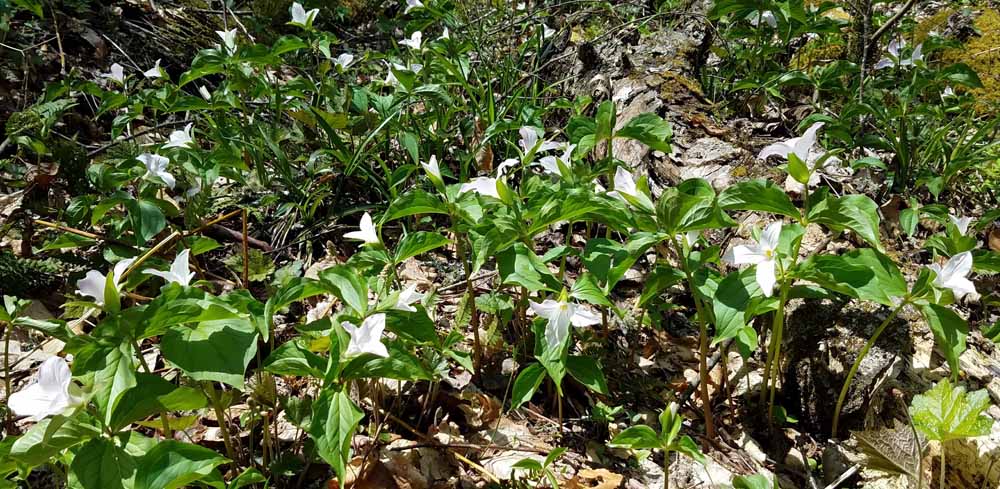
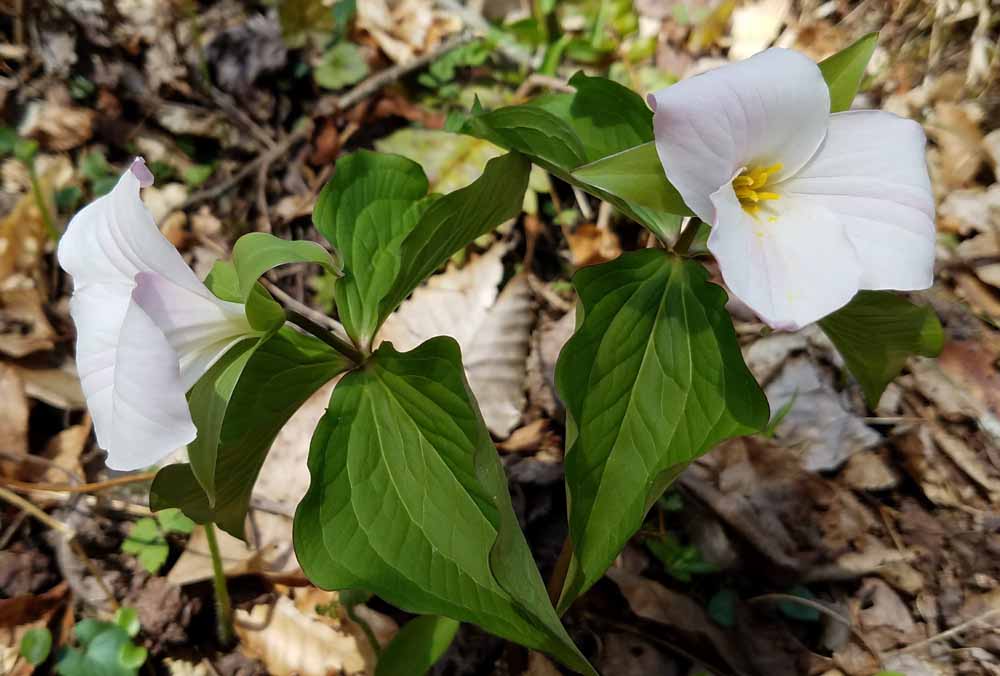


![Hemlock Varnish Shelf Mushroom; Hemlock Reishi (Ganoderma tsugae) [Ganodermataceae]](https://i0.wp.com/wcbotanicalclub.org/wp-content/uploads/2018/04/20180409_103918pl.jpg?w=404&h=296&ssl=1 "Hemlock Varnish Shelf Mushroom; Hemlock Reishi (Ganoderma tsugae) [Ganodermataceae]")
![American Beech (Fagus grandifolia) [Fagaceae]](https://i0.wp.com/wcbotanicalclub.org/wp-content/uploads/2018/04/dsc_9851_edited-1dh.jpg?w=228&h=141&ssl=1 "American Beech (Fagus grandifolia) [Fagaceae]")


![Long-spurred Violet (Viola rostrata) [Violaceae]](https://i0.wp.com/wcbotanicalclub.org/wp-content/uploads/2018/04/viola-rostrata-long-spurred-violet201804090104-jpegjp.jpg?w=225&h=174&ssl=1 "Long-spurred Violet (Viola rostrata) [Violaceae]")




![Sweet Shrub (Calycanthus floridus) [Calycanthaceae]](https://i0.wp.com/wcbotanicalclub.org/wp-content/uploads/2018/04/20180406_sweet-shrub-calycanthus-floridus7.jpg?w=279&h=157&ssl=1 "Sweet Shrub (Calycanthus floridus) [Calycanthaceae]")
![Dog Hobble (Leucothoe fontanesiana) [Ericaceae]](https://i0.wp.com/wcbotanicalclub.org/wp-content/uploads/2018/04/dog-hobble-leucothoe-fontanesiana.jpg?w=353&h=157&ssl=1 "Dog Hobble (Leucothoe fontanesiana) [Ericaceae]")


![Robin's Plantain (Erigeron pulchellus) [Asteraceae]](https://i0.wp.com/wcbotanicalclub.org/wp-content/uploads/2018/04/20180406_robins-plantain-erigeron-pulchellus-015.jpg?w=296&h=313&ssl=1 "Robin's Plantain (Erigeron pulchellus) [Asteraceae]")


![Yellow Mandarin; Fairy Bells (Prosartes lanuginosa) [Liliaceae]](https://i0.wp.com/wcbotanicalclub.org/wp-content/uploads/2018/04/20180402_yellow-mandarin-prosartes-lanuginosa-03.jpg?w=198&h=167&ssl=1 "Yellow Mandarin; Fairy Bells (Prosartes lanuginosa) [Liliaceae]")


![Cut-leaved Toothwort (Cardamine concatenata) [Brassicaceae]](https://i0.wp.com/wcbotanicalclub.org/wp-content/uploads/2018/04/20180402_cut-leaved-toothwort-cardamine-concatenata-01.jpg?w=289&h=223&ssl=1 "Cut-leaved Toothwort (Cardamine concatenata) [Brassicaceae]")


![Slippery Elm (Ulmus rubra) [Ulmaceae] Seed Pods](https://i0.wp.com/wcbotanicalclub.org/wp-content/uploads/2018/04/dh-dsc_9671_slippery-elm-ulmus-rubra.jpg?w=211&h=139&ssl=1 "Slippery Elm (Ulmus rubra) [Ulmaceae] Seed Pods")

![Southern Chervil (Chaerophyllum tainturieri ) [Apiaceae]](https://i0.wp.com/wcbotanicalclub.org/wp-content/uploads/2018/04/jp-chaerophyllum-tainturieri-tainturier27s-or-southern-chervil201804029818.jpeg?w=192&h=149&ssl=1 "Southern Chervil (Chaerophyllum tainturieri ) [Apiaceae]")


![American Beech (Fagus grandifolia) [Fagaceae]](https://i0.wp.com/wcbotanicalclub.org/wp-content/uploads/2018/04/20180402_113307.jpg?w=636&h=358&ssl=1 "American Beech (Fagus grandifolia) [Fagaceae]")

